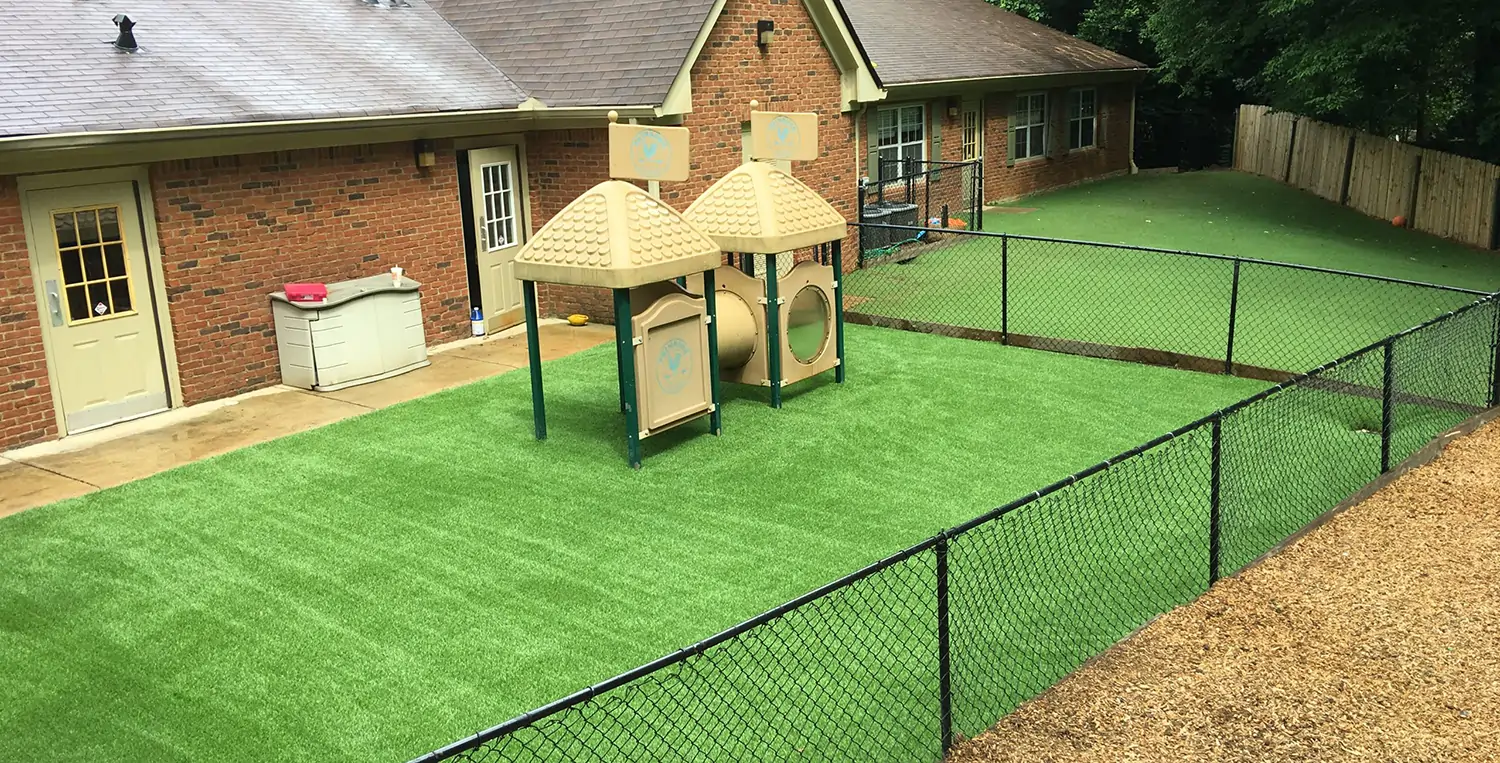
Drainage and base preparation is the part of a Baytown turf installation that nobody sees after the job is complete — and the part that determines whether the finished surface performs correctly for five years or fifteen. Artificial Turf of Baytown builds bases that account for Baytown's specific ground conditions: heavy Beaumont clay that holds water longer than sandy soil, a water table near Cedar Bayou tributaries that sits high after significant rain events, and soil that swells in wet season and contracts in dry season in a way that gradually repositions improperly anchored materials. We offer drainage and base preparation as a standalone service for properties where the existing base has failed and the surface turf is still in acceptable condition, or for clients who want the base work done as a separate phase before installation. We also build the base as part of every full turf installation we handle, but some households have had turf installed by other operators and need the foundation corrected without replacing the surface. Drainage and base preparation is not complicated to describe — remove the existing material, establish proper grade and slope, build a compacted aggregate base in layers, install perforated drainage material where the site requires it, and confirm everything is performing before the surface goes down. But each step done wrong compounds into a surface problem. A base that is not fully compacted settles unevenly and creates low spots. A slope that is too shallow allows water to dwell and saturate the base over time. A drainage layer that is undersized for the amount of water a Baytown rain event deposits will back up and create standing surface water. The Beaumont clay that runs through Baytown, Highlands, Crosby, and Channelview is not forgiving of shortcuts in base construction. We build to a standard that accounts for this ground rather than a standard built for sandier soil climates.